• HOME
  • ABOUT
    • Our Story
    • Leadership
    • Supporters & Partners
    • Contact Us
  • LEARN
    • Burrowing Owls
    • Gopher Tortoises
    • Conservation Overview
    • Research & Studies
    • Protected Properties
  • WILDLIFE HELP
  • GET INVOLVED
    • Volunteer
    • Owl Landlord Program
    • Events
  • DONATE
  • MEDIA
    • Wildlife Gallery
    • Wildlife Videos
    • Photo Contest Winners
    • Conservation News
    • Media Archive
  • CCWT Resource Center
  • More
    • HOME
    • ABOUT
      • Our Story
      • Leadership
      • Supporters & Partners
      • Contact Us
    • LEARN
      • Burrowing Owls
      • Gopher Tortoises
      • Conservation Overview
      • Research & Studies
      • Protected Properties
    • WILDLIFE HELP
    • GET INVOLVED
      • Volunteer
      • Owl Landlord Program
      • Events
    • DONATE
    • MEDIA
      • Wildlife Gallery
      • Wildlife Videos
      • Photo Contest Winners
      • Conservation News
      • Media Archive
    • CCWT Resource Center
  • HOME
  • ABOUT
    • Our Story
    • Leadership
    • Supporters & Partners
    • Contact Us
  • LEARN
    • Burrowing Owls
    • Gopher Tortoises
    • Conservation Overview
    • Research & Studies
    • Protected Properties
  • WILDLIFE HELP
  • GET INVOLVED
    • Volunteer
    • Owl Landlord Program
    • Events
  • DONATE
  • MEDIA
    • Wildlife Gallery
    • Wildlife Videos
    • Photo Contest Winners
    • Conservation News
    • Media Archive
  • CCWT Resource Center

BURROWING OWLS

Cape Coral's Beloved Official City Bird

 Cape Coral is home to Florida's largest population of burrowing owls, making our community one of the best places to experience 

these remarkable little birds in the wild.


Unlike most owls, they live, nest, and raise their young 

underground in burrows throughout neighborhoods, parks, 

golf courses, vacant lots, and protected natural areas.


Cape Coral continues to experience rapid residential and commercial growth, placing increasing pressure on the open spaces and sandy habitats that burrowing owls depend on. As development continues, protecting the remaining natural areas has become more important than ever to help ensure these remarkable birds 

continue to thrive throughout our community.


Recent annual burrowing owl Census results, conducted by Cape Coral Friends of Wildlife (CCFW), highlight the importance of 

continued habitat conservation:


  • 2026: 7,828 owls
  • 2025: 7,008 owls 
  • 2024: 5,098 owls 
  • 2023: 4,214 owls 


Source: Cape Coral Friends of Wildlife Annual Burrowing Owl Census.


Despite the City's substantial burrowing owl population, the species is listed as State Threatened in Florida 

due to continued habitat loss and development pressures.


 FWC Definition: A State-designated Threatened species is a 

species native to Florida that has been classified as Threatened 

by the Florida Fish and Wildlife Conservation Commission (FWC) 

in accordance with Florida’s state-listing criteria.  


Every protected burrow and every acre of conserved habitat helps secure a future where these iconic birds continue to thrive.

🦉 Meet Cape Coral's Burrowing Owl

Small in size but overflowing with personality, the burrowing owl is 

unlike any other owl in North America. Instead of nesting high in trees, these remarkable birds make their homes underground, living alongside people in neighborhoods, parks, golf courses, schools, 

and protected natural areas throughout Cape Coral.


Standing only about 9 inches tall, burrowing owls are among Florida's smallest owls, yet they are also among its most captivating. Their bright yellow eyes, expressive faces, and curious head tilts have made them 

one of Cape Coral's most beloved wildlife ambassadors.


Unlike most owls, burrowing owls are often active during the day. Visitors are frequently delighted to see them standing watch outside their burrows, scanning their surroundings before suddenly darting off in pursuit of insects or returning underground to their waiting owlets.


Their charm, adaptability, and close connection with the Cape Coral community have made the burrowing owl a true symbol of 

local wildlife conservation.

🤎 Burrowing Owl Antics

They're Not Just Cute... They're Comedians

Spend just a few minutes watching a burrowing owl, and you'll 

quickly discover why so many people fall in love with them. 

These tiny owls are full of personality, displaying curious behaviors and expressive movements that often seem surprisingly human.


One moment they may be standing tall beside their burrow, carefully watching everything around them. The next, they're bobbing their heads, tilting from side to side, stretching their long legs, or suddenly sprinting across the ground in pursuit of an unsuspecting insect.


Every owl has its own unique personality. Some are naturally bold and curious, while others are more cautious, quietly observing the world from the safety of their burrow entrance before deciding whether to venture out.


For many Cape Coral residents, these daily encounters become something to look forward to. Watching familiar neighborhood owls throughout the nesting season and seeing young owlets emerge from the burrow for the very first time creates memories that last a lifetime.


🦉 Did You Know?


Burrowing owls communicate using a variety of calls, 

body movements, and head bobs. Their expressive behavior helps mates, parents, and young owls stay connected while also warning of 

danger and defending their territory.

Meet Some of Cape Coral's Favorite Neighbors

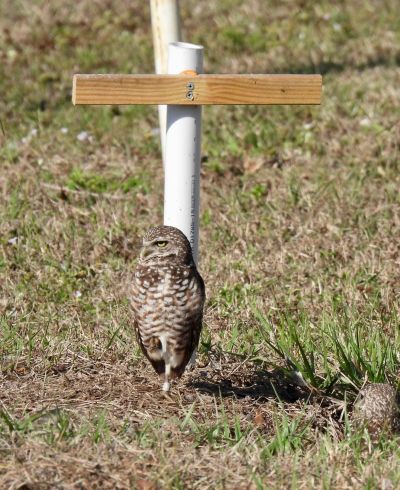
🦉 Whatcha Lookin' At?

🦉 Well... This Is Awkward.

🦉 Well... This Is Awkward.

🦉 Well... This Is Awkward.

🦉 Well... This Is Awkward.

🦉 Well... This Is Awkward.

🦉You Guys Seeing This?

🦉 Well... This Is Awkward.

🦉You Guys Seeing This?

📋 Burrowing Owl Quick Facts

 Scientific Name: Athene cunicularia floridana

Common Name: Florida burrowing owl

Height: 8 to 10 inches


Wingspan: 20 to 24 inches


Weight: About 5 to 8 ounces


Average Lifespan: 6 to 8 years in the wild


Habitat: Open grassy areas, vacant lots, parks, golf courses, school campuses, and protected conservation lands


Diet: Insects, beetles, grasshoppers, crickets, spiders, small reptiles, frogs, rodents, and other small prey


Most Active: Day and night, but most commonly seen during daylight hours


Nesting: Underground burrows, where they raise their young and shelter from predators and Florida's extreme weather


Conservation Status: Listed as Threatened in Florida


Cape Coral Fact: Cape Coral is home to one of Florida's largest populations of burrowing owls, making it one of the best places in the state to observe these remarkable birds in the wild.

🦉 NOT YOUR TYPICAL OWL

Burrowing owls are unlike most owls you'll encounter. While many owl species spend their lives hidden in forests and hunt primarily at night, they live in open landscapes and are often active during daylight hours.


One of their most fascinating traits is that they nest underground instead of in trees. They live in burrows, often using abandoned burrows created by gopher tortoises or other animals. In areas where natural burrows are unavailable, they may also use carefully installed artificial starter burrows.


Their unusually long legs allow them to run quickly across the ground, while their sharp eyesight helps them detect movement from remarkable distances. They're constantly alert and are well known for their curious head tilts, upright posture, and expressive behavior around their burrows.


Despite their small size, burrowing owls are bold, adaptable, and full of personality. Their ability to thrive alongside people has made them one of Cape Coral's most recognizable and beloved wildlife ambassadors.


⭐ Key Traits

  • Ground-nesting owl 
  • Active during both the day and night 
  • Lives in underground burrows 
  • Long legs built for running 
  • Bright yellow eyes with exceptional eyesite 
  • Curious, alert, and highly expressive

📍 Where to Find Burrowing Owls in Cape Coral

One of the best things about Cape Coral's burrowing owls is that you don't have to visit a remote nature preserve to see them. These remarkable birds have adapted to life alongside people and can often be found throughout the city in open, grassy habitats.


Whether you're taking a walk through your neighborhood or visiting a local park, you may be surprised to spot a burrowing owl standing near its burrow. If you do, remember to enjoy these fascinating birds from a respectful distance and 

never disturb an active burrow.


Burrowing owls are commonly found in:

  • Vacant lots 
  • Neighborhood green spaces 
  • Parks 
  • School campuses 
  • Golf courses 
  • Utility easements 
  • Protected conservation properties 
  • Other open, grassy areas with sandy soil

🦉 Life at the Burrow


Home Beneath Our Feet


Burrowing owls spend much of their lives underground in burrows that provide shelter from predators, protection from Florida's weather, and a safe place to raise their young.


In Cape Coral, these burrows are commonly found in open grassy areas, vacant lots, parks, and protected conservation lands. While only a small entrance is visible above ground, the tunnel system below may extend 10 feet or more and includes a nesting chamber where eggs are laid and owlets are raised.


For a burrowing owl family, the burrow is much more than a nest. It is home, refuge, and the center of daily life.


Raising a Family Underground


Each spring, burrowing owls begin one of nature's most remarkable family stories. After choosing or preparing a burrow, the female lays her eggs in a protected nesting chamber deep below the surface while the male helps defend the area and brings food.


When the owlets hatch, they remain safely underground for several weeks before cautiously appearing at the burrow entrance. As they grow, it's common to see curious young owls peeking above ground, stretching their wings, and watching their parents before taking their first flights.


Unlike many wildlife species, both parents work together to protect, feed, and raise their young, giving the next generation the best chance to survive in an increasingly developed landscape.


Daily Life & Behavior


Throughout the day, burrowing owls spend much of their time standing near the entrance of their burrow, carefully watching everything happening around them. Their remarkable eyesight allows them to spot insects, predators, and movement from surprising distances.


Although they're capable of flight, burrowing owls often prefer to run across the ground in pursuit of prey. They communicate with one another using soft calls, body posture, and their famous head tilts, especially during breeding season when parents and owlets remain close together.


One of the reasons people love burrowing owls is that they seem genuinely curious. Rather than immediately flying away, they'll often pause to study nearby people, vehicles, or other wildlife before deciding whether there's anything to worry about.


Every visit to an active burrow is different. You might see an adult standing guard, owlets peeking from the entrance, parents returning with food, or a family quietly enjoying the warmth of a sunny Cape Coral afternoon.

🦉 Fascinating Owl Facts

Amazing Things You May Not Know


Burrowing owls may be small, but they possess some remarkable abilities that help them survive in Cape Coral's unique environment. Here are a few fascinating facts that make these tiny birds unlike any other owl.


👀 They Can Turn Their Heads About 270°

Although they can't rotate their heads all the way around, burrowing owls can turn them about 270 degrees. This incredible flexibility helps them keep watch for predators and prey without moving the rest of their body.


🏃 They Prefer to Run

Unlike most owls that rely almost entirely on flight, burrowing owls often chase insects and other small prey by running quickly across the ground using their unusually long legs.


🌞 They Hunt Day and Night

Most owls are active only after dark, but burrowing owls hunt throughout the day as well as at night. Their daytime activity makes them one of the easiest owls in North America to observe in the wild.


🎯 Natural Pest Control

A single burrowing owl family can consume hundreds of insects, rodents, and other small prey during nesting season, helping naturally control pest populations throughout the community.


❤️ Many Burrows Become Multi-Year Family Homes 

Some burrowing owls return to the same nesting area year after year, raising generation after generation in familiar surroundings. For many Cape Coral residents, watching a neighborhood owl family return each spring has become a cherished tradition. 


🍽️ Hunting & Food

 Tiny Hunter. Big Appetite.


Burrowing owls may be small, but they are remarkably skilled hunters. Using their exceptional eyesight, sharp hearing, and quick reflexes, they search for food throughout the day and into the evening.


Unlike many owls that hunt primarily from the air, burrowing owls often pursue prey on foot. Their long legs allow them to sprint across the ground after insects and other small animals with surprising speed and agility.


Their diet changes with the seasons, but insects make up much of their menu. Grasshoppers, beetles, crickets, spiders, and moths provide an abundant food source. They also hunt small lizards, frogs, mice, and other small prey whenever the opportunity arises.


During nesting season, both parents work tirelessly to keep their hungry owlets well fed, making countless hunting trips each day until the young birds are ready to hunt on their own.


🌿 Their Favorite Foods


  • Grasshoppers 
  • Beetles 
  • Crickets 
  • Spiders 
  • Moths 
  • Small lizards 
  • Frogs 
  • Mice and other small rodents 
  • Small snakes 


🦉 Did You Know?


Burrowing owls provide valuable natural pest control. A single owl family can consume hundreds of insects and many rodents during nesting season, helping maintain a healthy balance in Cape Coral's natural environment.

🦉 Burrowing Owl Life Cycle

Our Programs at Cape Coral Wildlife Trust

💕 Spring


Courtship & Nest Preparation

Adult pairs return to or prepare underground burrows, strengthen pair bonds, and get their nesting site ready for the breeding season.


🥚 Late Spring


Eggs Are Laid

The female lays 6 to 10 eggs deep inside the burrow while the male helps defend the territory and brings food to the nest.


🐣 About 4 Weeks Later


Owlets Hatch

Tiny owlets hatch underground, where they remain safe while their parents work tirelessly to feed and protect them.


👀 Early Summer


First Peek Outside

As they grow, curious owlets begin appearing at the entrance of the burrow, watching the world before taking their first flights.


🪽 Summer


Learning to Fly & Hunt

Young burrowing owls gradually learn to fly, chase insects, hunt for food, and survive on their own while still receiving guidance from their parents.


🦉 Late Summer & Beyond


Independent Adults

Juvenile owls become independent, establish their own territories, and eventually begin the cycle again the following spring.


💚 Why It Matters

Every successful nesting season depends on protected burrows, healthy habitat, and a community committed to helping burrowing owls thrive. By protecting nesting areas today, we're helping ensure future generations of these remarkable birds continue to call Cape Coral home.

😊 Personality & Behavior

Despite their small size, burrowing owls have personalities that are impossible to ignore. Curious, alert, and surprisingly expressive, they often seem just as interested in watching people as people are in watching them.


Unlike many birds that immediately fly away, burrowing owls will often pause outside their burrow, carefully studying their surroundings before deciding what to do next.

Every owl has its own personality. Some are bold and confident, standing proudly outside their burrow as people pass by. Others are more cautious, quietly observing from a safe distance before venturing out to hunt or explore.


👀 Did You Notice?


Have you ever felt like a burrowing owl was watching you?


You're probably right.


Their bright yellow eyes constantly scan the world around them, helping them detect predators, locate prey, and keep watch over their family. That curious stare isn't aggression or fear. It's simply one of nature's most observant little birds carefully evaluating everything happening nearby.


💚 Cape Coral's Neighborhood Owl


For many residents, seeing a familiar burrowing owl has become one of the simple pleasures of living in Cape Coral. Whether standing beside its burrow, perched on a nearby post, or quietly watching the neighborhood, these remarkable birds remind us that people and wildlife can successfully share the same community.

🦉 Living With Burrowing Owls

Sharing Our Community

One of the things that makes Cape Coral so special is that people and wildlife share the same community.


Burrowing owls have adapted to living alongside homes, schools, parks, golf courses, businesses, and vacant lots. While they may appear comfortable around people, they remain wild birds that depend on space, quiet, and suitable habitat to successfully raise their young.


If you're fortunate enough to have burrowing owls nearby, enjoy watching them from a respectful distance. Never block the entrance to a burrow, disturb nesting birds, or allow pets to approach the area. 

Even well-intentioned curiosity can cause 

unnecessary stress during nesting season.


By respecting their space and protecting their habitat, we help ensure burrowing owls remain part of Cape Coral's 

landscape for generations to come.


Living Alongside Burrowing Owls


  • Observe from a respectful distance. 
  • Keep pets away from active burrows. 
  • Never block or disturb a burrow entrance. 
  • Respect temporary protective fencing and posted signs. 
  • Report injured owls or damaged burrows to the appropriate wildlife authorities. 
  • Help educate friends and neighbors about burrowing owl conservation.

🛡️ Challenges They Face


Challenges They Face


Although burrowing owls have successfully adapted to living in Cape Coral's neighborhoods, their future is far from secure.


As development continues across Southwest Florida, suitable nesting habitat becomes increasingly difficult to find. Vacant lots that once provided safe places to nest are gradually replaced by homes, roads, and commercial development, leaving fewer areas where owls can raise their young.


Human activity also creates additional challenges. Burrows may be accidentally damaged during landscaping or construction, while vehicle collisions, domestic pets, pesticides, and disturbance during nesting season all contribute to declining populations.


Florida burrowing owls are currently listed as a Threatened species by the Florida Fish and Wildlife Conservation Commission (FWC). This designation recognizes the growing pressures facing the species and the importance of continued conservation efforts.


The Greatest Threats


  • Loss of nesting habitat from development 
  • Disturbance of active burrows 
  • Vehicle collisions 
  • Predation by domestic cats and dogs 
  • Pesticide use that reduces insect populations 
  • Human disturbance during nesting season 
  • Fragmentation of remaining open space

❤️ How You Can Help

Small Actions. Big Difference.

Protecting burrowing owls is something we can all do.   Every resident, visitor, and supporter can make a meaningful difference.


Whether you're respecting an active burrow, sharing what you've learned with a neighbor, volunteering your time, or supporting habitat conservation, every action helps protect one of 

Cape Coral's most beloved native species.


 Together, our small actions today help ensure burrowing owls remain part of Cape Coral for generations to come. 


Ways You Can Help


🦉 Respect active burrows and posted protection areas.

🏡 Keep pets away from nesting sites.

🌱 Support organizations working to protect wildlife habitat.

📚  Share what you've learned with your neighbors, friends, and family. 

🤝 Volunteer for conservation projects and community events.

💚 Support Cape Coral Wildlife Trust's mission to protect natural habitat.

📷 Enjoy wildlife responsibly by observing and photographing burrowing owls from a respectful distance.

🦉 Found a Burrowing Owl Burrow?

 Discovering a burrowing owl burrow on your property or in your neighborhood is a special experience. 

These remarkable birds have chosen that location because it provides the open habitat they need to survive.  


If the burrow is active, the best thing you can do is simply give the owls space. Observe from a respectful distance, keep pets away from the area, and avoid disturbing the entrance. During nesting season, even small disturbances can cause unnecessary stress for the

 adult birds and their young.


If you're unsure whether a burrow is active, have questions about protecting it, or discover an injured burrowing owl, help is available.


What You Should Do


🦉 Observe from a respectful distance.

🚫 Never block, fill, or disturb a burrow entrance.

🐕 Keep dogs and cats away from active burrows.

📸 Photograph responsibly without approaching too closely.

☎️ Contact the Florida Fish and Wildlife Conservation Commission (FWC) 

if you find an injured owl or have concerns about a burrow.

💚 Contact Cape Coral Wildlife Trust if you have questions about local burrowing owl conservation or would like guidance on protecting a burrow.


Helpful Resources


Cape Coral Wildlife Trust
For local conservation information and habitat protection.


Florida Fish and Wildlife Conservation Commission (FWC) 

For reporting injured wildlife or wildlife violations:

Wildlife Alert Hotline: 1-888-404-FWCC (3922)


Clinic for the Rehabilitation of Wildlife (CROW)

For licensed wildlife rehabilitation services if an owl is injured.

 Phone: (239) 472-3644 

Celebrate Cape Coral's Burrowing Owls


A Community Tradition


Cape Coral's burrowing owls are more than a protected species. They are part of the city's identity and a source of pride for residents who value the unique wildlife that makes our community special.


Each year, people from across Southwest Florida gather to celebrate these remarkable birds during the Annual Burrowing Owl Festival. 

The festival brings together families, conservation organizations, educators, photographers, and wildlife enthusiasts for a day dedicated to 

learning, discovery, and appreciation.


Visitors can enjoy educational exhibits, live wildlife presentations, guest speakers, children's activities, guided experiences, and opportunities to connect with local organizations working to protect 

Cape Coral's natural heritage.


 The Annual Burrowing Owl Festival celebrates everything that makes Cape Coral's official city bird so special while inspiring the next generation of wildlife stewards. Every visitor, volunteer, sponsor, and supporter plays a role in ensuring burrowing owls remain a treasured part of 

Cape Coral for generations to come. 


Festival Highlights


🦉 Educational exhibits and wildlife experts

🎤 Guest speakers and conservation presentations

👨‍👩‍👧‍👦 Family-friendly activities for all ages

📸 Photography opportunities

🌿 Conservation organizations and local partners

💚 Volunteer and community engagement opportunities


👉 Planning to attend?


Visit our EVENTS page for Borrowing Owl Festival dates, schedules, volunteer opportunities

and the latest Cape Coral Wildlife Trust Event Information.

🦉 Continue Exploring

Your Journey Doesn't End Here.


Your journey to protect Cape Coral's wildlife is just beginning. 


Visit the CCWT Resource Center to explore educational articles, 

conservation resources, native wildlife guides, and practical 

ways you can help protect Cape Coral's unique habitats.


Whether you're interested in burrowing Owls, gopher tortoises, native plants, or local conservation, you'll find trusted information designed to inspire curiosity, deepen understanding, and encourage stewardship. 

Support Our Mission

Cape Coral Wildlife Trust

PO Box 152624, Cape Coral, FL 33915

239-980-2593 or [email protected]

Copyright © 2025 Cape Coral Wildlife Trust - All Rights Reserved.


Powered by

Website Privacy

 We use cookies to help improve your experience, understand how visitors use our website, and identify the information most valuable to our visitors and supporters. This helps us improve our website and better support wildlife conservation in Cape Coral. 

Continue