OUR MISSION

Protect Wildlife, Preserve Habitat, Build a Legacy
Cape Coral Wildlife Trust acquires and protects natural lands throughout Cape Coral, preserving critical habitat for burrowing owls, gopher tortoises,
and the many other native wildlife species
that share our neighborhoods.
Through strategic land conservation, habitat stewardship, conservation education, and
scientific research, we help protect the natural landscapes that sustain wildlife while preserving
Cape Coral's unique ecological heritage.
IN MEMORY OF BEVERLY SALTONSTALL
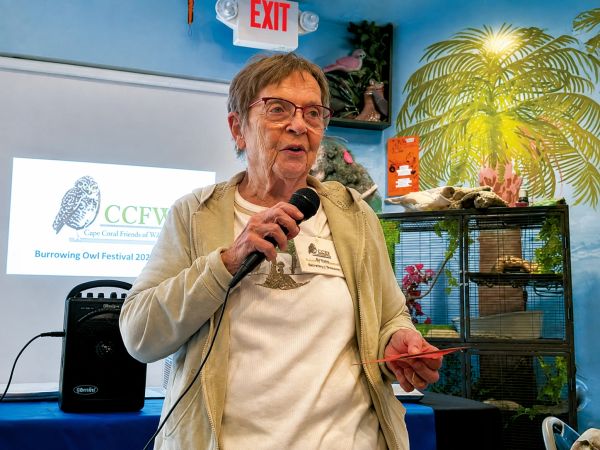
A Lasting Legacy for Cape Coral’s Wildlife
Beverly Saltonstall was one of Cape Coral’s early and passionate voices for wildlife conservation. As one of the founders of Cape Coral Friends of Wildlife,
Beverly helped bring attention to the importance
of protecting the wildlife and habitat that make
our community so special.
Her dedication to Cape Coral’s Burrowing Owls
and her years of advocacy helped inspire a
community to notice, appreciate, and
protect the wildlife living alongside us.
Beverly’s legacy lives on in the conservation work continuing throughout Cape Coral today.
WHAT WE PROTECT

Burrowing Owls
Cape Coral's Signature Species
Unlike most owls, burrowing owls live and nest underground rather than in trees.
Cape Coral is home to Florida’s largest population of burrowing owls, making these remarkable birds an important part of our community and natural heritage.
Why Protection Matters
- 🏡 Protects nesting and foraging habitat
- 🌿 Preserves the open spaces burrowing owls need
- 🐣 Gives adults and young a safer place to thrive
- 💚 Helps keep Cape Coral’s signature species part of our community
Learn how protected properties help ensure these iconic birds remain part of Cape Coral's landscape.
Gopher Tortoises
A Keystone Species
Gopher tortoises are a keystone species that play a
vital role in Florida’s ecosystems.
Their underground burrows provide shelter for
more than 350 species of wildlife,
including mammals, reptiles, amphibians, and insects.
Why Protection Matters
- 🏡 Preserves essential gopher tortoise habitat
- 🐢 Protects burrows and the tortoises that depend on them
- 🌿 Conserves natural areas threatened by development
- 💚 Benefits hundreds of other species that share their habitat
EVERY ACRE MATTERS

As Cape Coral continues to grow, natural habitat is disappearing.
Cape Coral Wildlife Trust (CCWT) acquires and protects conservation properties that provide essential habitat for burrowing owls, gopher tortoises, and other native wildlife.
Over the years, the Trust's first conservation properties, which began with more than 40 active gopher tortoise burrows, have demonstrated the lasting value of land protection. When wildlife has safe, undisturbed habitat, nature responds.
What Our Protected Lands Provide
Conservation of natural land amidst residential development preserves wildlife habitat, threatened and/or endangered species and biodiversity; maintains scenic landscape for people; helps reduce flooding; helps filter water/improve water quality; maintains the tree canopy that filters our air and preserves native plant populations.
Conserving land increases property values near these greenspaces too.
When we conserve land, all living things win.
Help Protect Cape Coral's Wildlife
Your support helps CCWT acquire, protect, and steward conservation lands that provide habitat for native wildlife and preserve Cape Coral's natural heritage.
Our Conservation Partner
Working Together For Wildlife

In 2017, Cape Coral Friends of Wildlife (CCFW) founded Cape Coral Wildlife Trust (CCWT) to expand local conservation efforts.
While CCWT acquires and protects conservation properties, CCFW supports that mission through fundraising, habitat stewardship,
volunteer efforts, and community education.
Together, the two organizations protect Burrowing Owls, Gopher Tortoises,
and hundreds of other native species, ensuring Cape Coral's
natural heritage remains protected for years to come.
CCFW Monthly Newsletter

Contact Cape Coral Friends of Wildlife